
“Problems are not the end of life. They are only part of our story.”
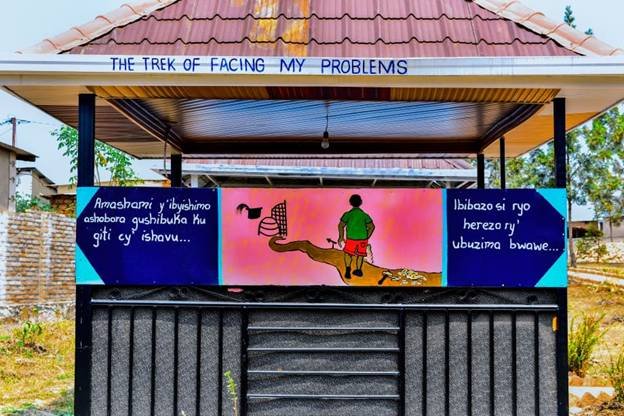
This journey begins with an invitation:
Every person faces challenges. Some are easy to see, while others remain hidden deep within the heart. Sometimes people smile on the outside while carrying pain that no one else can see. Many believe they are alone in their struggles, yet difficult moments are a part of every life. The journey reflected in these paintings reminds us that challenges are part of being human, but they do not have to define or control our lives.
“Welcome to the journey of facing your problems.”
In Rwanda, there is a proverb that says, “Ijoro ribara, uwariraye,” meaning, “Only the person who spent the night knows what happened during that night.” Another proverb says, “Aho kwica gitera, wica ikibimutera,” meaning, “Instead of fighting the effect, deal with the real cause
These two proverbs introduce the whole journey. The solution is not to run away from problems or pretend as if they do not exist. Instead, it is to understand them, face them, and discover new hope.
“Problems are not the end of your life.”
Many people believe that today’s pain will last forever. They think one mistake, one loss, one illness, or one disappointment has destroyed everything. This picture gently says otherwise. Today’s problems are only one chapter of the story, not the whole story. The picture is inviting us to start the journey. A person is shown standing with confidence, ready to move forward.
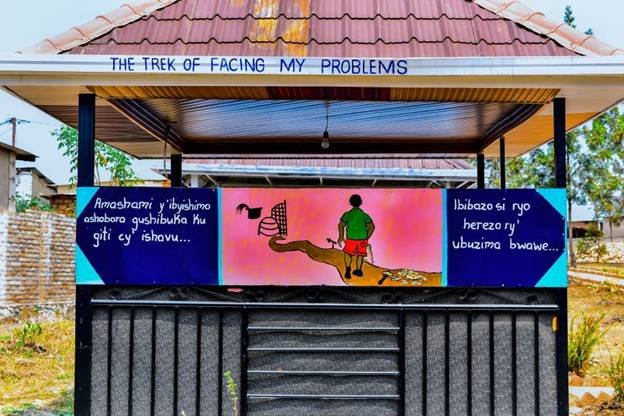
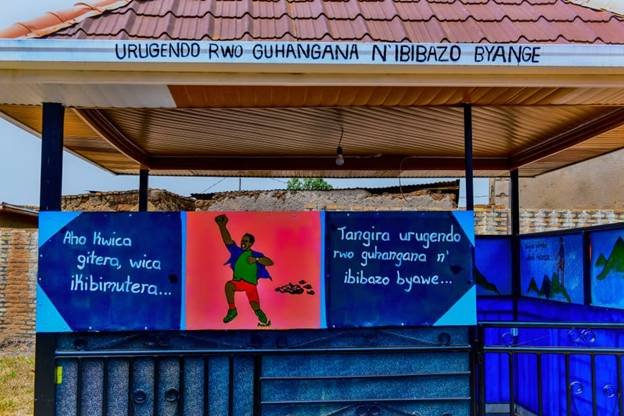
“Instead of destroying the problem, destroy what causes the problem.”
This changes everything. Sometimes we spend years fighting symptoms instead of understanding where they come from. We become angry without asking why. We feel afraid without understanding the fear. We experience sadness without exploring its roots.
- What is the root cause beneath the symptoms I experience?
- What would healing look like if I focused on the root rather than just the effects?
Real healing begins when we become curious about our lives.
The painting asks us to begin not tomorrow, not when everything feels perfect, but today.
The next picture reminds us that simply starting takes courage. Facing our problems is not easy. Many people avoid painful memories because they fear they will become overwhelmed. Others keep themselves busy so they never have to stop and think.
But healing begins with one courageous step.
As we continue, another Rwandan proverb appears:
“Wirukankana umugabo kenshi ukamumara ubwoba.”
This means that if someone keeps chasing another person again and again, eventually the fear disappears. At first this proverb may sound unusual, but its meaning is powerful.
Problems often become smaller when we stop running away from them.
The first time we speak about painful experiences, we may cry. The second time may still be difficult. The third time becomes a little easier. Slowly, fear loses its power. The problem has not disappeared, but it no longer controls us in the same way.
When we give a problem a name, when we describe it, and when we understand it, it becomes something we can face instead of something that controls us from the shadows.
Another proverb follows:
This reminds us not to imagine disasters before they happen. Our minds often create stories that make problems appear bigger than they really are. Anxiety tells us the worst will certainly happen. Fear convinces us there is no hope.
But many of the terrible things we imagine never happen.
The paintings encourage us to say:
“I have seen my problem. I have given it a name. Now I will begin the journey.”
Naming the problem is an important step. Instead of saying, “I am hopeless,” we can say, “I am facing hopelessness.” Instead of saying, “I am anxious,” we can say, “Anxiety is affecting me.”
This small change helps us see that the problem is not our identity.
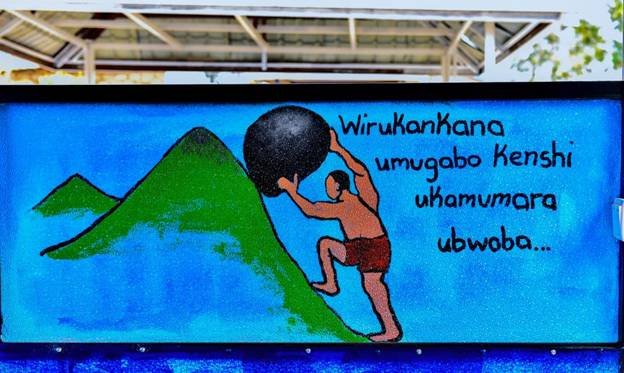
The next series of paintings shows a person climbing a mountain while pushing a heavy stone. The journey is difficult. Every step requires effort. This represents the hard work of healing.
Recovery is not quick.
Sometimes we move forward one step and then slide back. Sometimes we feel tired. Sometimes we wonder whether the journey is worth continuing. But every step teaches us something.
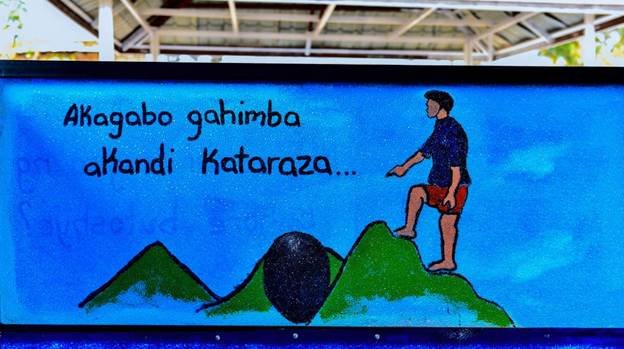
“Akagabo gahimba kandi kataraza.”
The next painting shows the person standing above the stone instead of underneath it.
The message says:
- What challenge once felt impossible but now feels more manageable?
The stone has not disappeared, but the person is no longer trapped beneath it.
The problem that once seemed impossible has become something that can be looked at
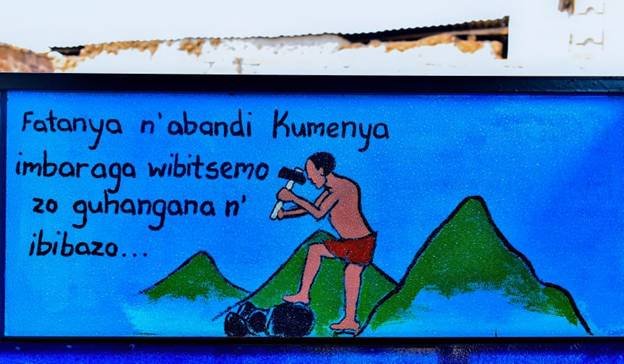
The following painting shows someone examining the stone carefully and breaking it
This teaches us to study our problems and face them instead of fearing them. Work with other to know your strengths to fight your problems.
Questions become important.
- What makes this problem stronger?
- When does it become smaller?
- Who helps me?
- What gives me strength?
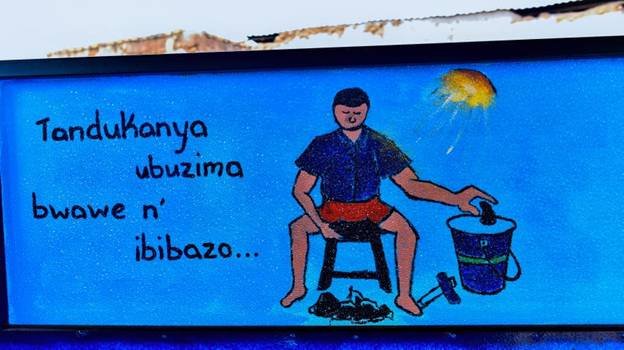
“Separate your life from your problems.”
The picture shows a person sitting quietly beside the stones instead of carrying them. The message says, “Separate your life from your problems.”
These words remind us that the problem is separate from the person.
This is one of the most important ideas in the entire journey.
The problem is the problem. The person is never the problem.
When people believe they are the problem, shame grows. But when they understand that the problem is something outside themselves, hope begins to grow.
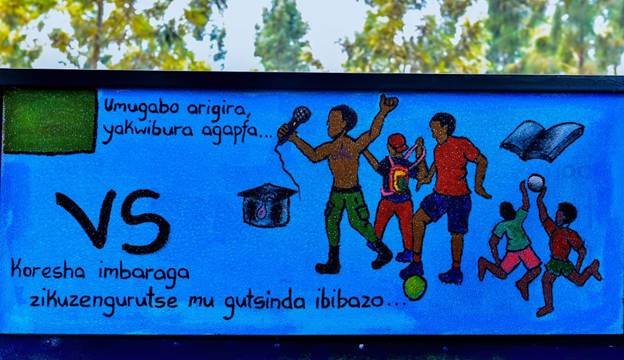
The next painting shows different people singing, playing, learning, reading, and supporting one another.
“Umugabo arigira yakwibura agapfa.”
People need their own courage and responsibility, but they also need others.
Healing is not a journey we complete alone.
Family, friends, neighbours, teachers, counsellors, faith communities, books, music, education, sports, and creative activities can all become sources of strength.
These are the resources surrounding us.
- What strengths do I already have within myself that can help me face challenges?
- Who are the people or what are the resources around me that give me strength and support?
- When I face difficulties, do I allow others to support me, or do I try to carry everything alone?
- What new activities, relationships, or resources could I use to continue my healing journey?
The message explains that people should discover the strengths hidden inside themselves while also using the strengths around them.
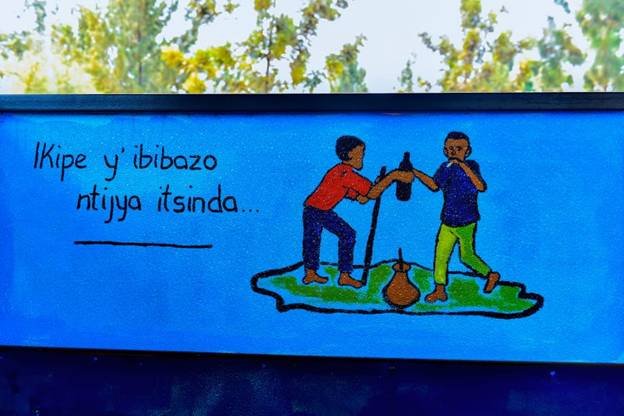
Another painting shows two people sharing a drink together.
The words say that the team of problems never wins.
Problems often try to isolate people. They tell us nobody understands. They convince us to suffer in silence but Connection breaks that isolation.
Talking, listening, laughing, learning, and supporting one another weakens the power of problems.
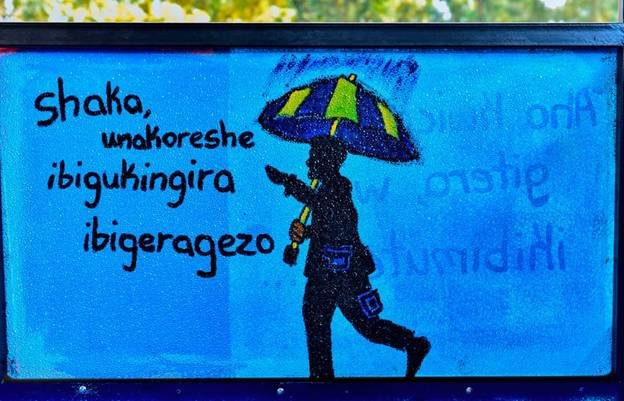
The next painting introduces a beautiful symbol of an umbrella.
The umbrella represents protection. It explains that you have to choose and use what will protect you from your problems.
Life will continue to bring rain. New difficulties will come. Sadness, stress, disappointment, and fear are part of life.
We cannot stop the rain,but we can carry an umbrella.
Our umbrella may include healthy friendships, prayers, counselling, exercise, writing, reading, music, hope, gratitude, or other practices that protect our wellbeing.
The umbrella does not stop storms, It helps us walk through them.
- What are the “umbrellas” in your life that protect your mental and emotional wellbeing?
- When difficulties come, what healthy strategies or supports help you walk through them?
- What new practices, relationships, or resources could you add to strengthen your protection during difficult times?
- How can you learn to accept the storms of life while still choosing ways to care for yourself?
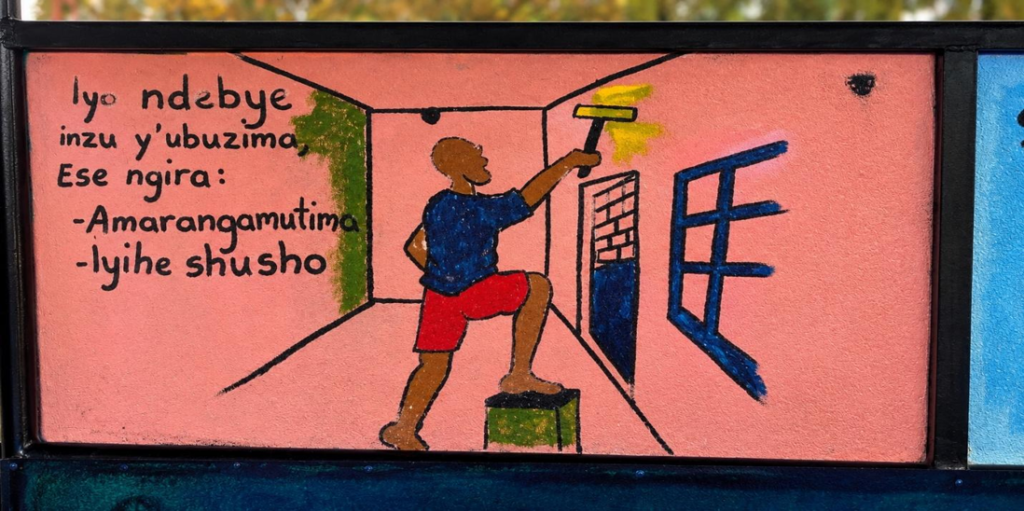
Another painting compares life to a house with many rooms.
One room may hold childhood memories.
Another may contain family relationships.
Another may represent school.
Another may represent work.
Some rooms may be bright and peaceful.
Others may be dark and painful.
The painting invites us to walk through each room with honesty.
It asks:
- What emotions live here?
- What lessons have I learned?
- What needs cleaning?
- What needs repairing?
- What needs a fresh coat of paint?
- Like a house, our lives can always be renewed.
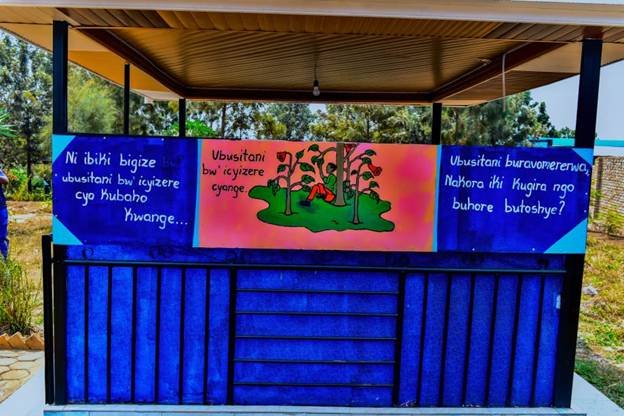
Finally, we arrive at the last paintings.
They show a beautiful garden.
The garden represents hope.
The guide asks us:
“What makes up your garden of hope?”
Every garden contains different plants.
For one person, hope grows through family.
For another, through faith.
For another, through education.
For another, through helping others.
Hope must also be watered.
The final question asks:
“What will you do to keep your garden green?”
Hope does not survive by accident.
It grows through daily care, encouragement, gratitude, healthy relationships, and continued courage.
The journey ends with deep gratitude for everyone who has been willing to begin.
The final message reminds us of three simple truths:
No night lasts forever.
No rain falls forever.
Nothing lasts forever. You may be crying today but singing tomorrow.
This journey does not promise a life without pain. Instead, it reminds us that pain can be understood, faced, shared, and transformed. Problems do not define who we are. We can learn from them, separate ourselves from them, discover our hidden strengths, receive support from others, protect ourselves through life’s storms, rebuild the rooms of our lives, and finally sit peacefully in a well-watered garden of hope.
Watch this video of Dr. Chaste Uwihoreye explaining more about “Facing your Problem” space
Living Alongside Unsolvable Problems: How to Strip Them of Their Power with Dr.Chaste Uwihoreye
Welcome back to our journey of addressing life’s hardships. While many challenges can be solved or left behind, we must confront a difficult truth: some problems cannot simply be parted with.
Sometimes, hardships arrive like an unwanted, permanent neighbor who refuses to leave. Whether it is a chronic illness that will never fully heal, an unchangeable life circumstance, marital struggles, or deep emotional burdens that cause severe pain, certain trials stay with us for the long haul. When a problem cannot be removed, how do we keep going?
The Art of Stripping Away Power
When a problem is permanent, our goal shifts from elimination to disempowerment.
Ask yourself this vital question: Is it possible to carry a problem while ensuring it lacks power and authority over your life?
Even when a hardship remains, you must remember a core distinction: A problem is a problem, but you are still you. A chronic illness may be present, but it does not define your entire identity. You remain whole, separate from the affliction you carry.
The Tree Metaphor: A Visualization Exercise
To conceptualize this shift in power, imagine your persistent problem as a large tree planted right beside you—one whose roots have spread out, threatening to disrupt your life.
- Stand Your Ground: Take a moment to step between yourself and the tree.
- Disarm the Roots: Acknowledge the roots as the power the problem holds over your thoughts, emotions, and daily existence. By confronting it, you strip it of that control.
- Let It Stand Powerless: Just like a withered tree or an old stump left by the wayside, the problem may still physically be there, but it is dead and harmless. You can walk past it safely.
Focusing on Your Future
Once you have stripped the hardship of its life and authority, you can continue your journey. The problem may remain in the background, but it no longer dictates your existence.
This allows you to turn your focus entirely back to where it belongs: your projects, your personal growth, and your future. Just like a gardener whose crops continue to thrive despite a dead stump in the field, your life can continue to flourish, grow, and bear fruit.